A Dry Leaf, a Cracked Pod, a Strip of Peel: Flavouring Dark Chocolate at Home
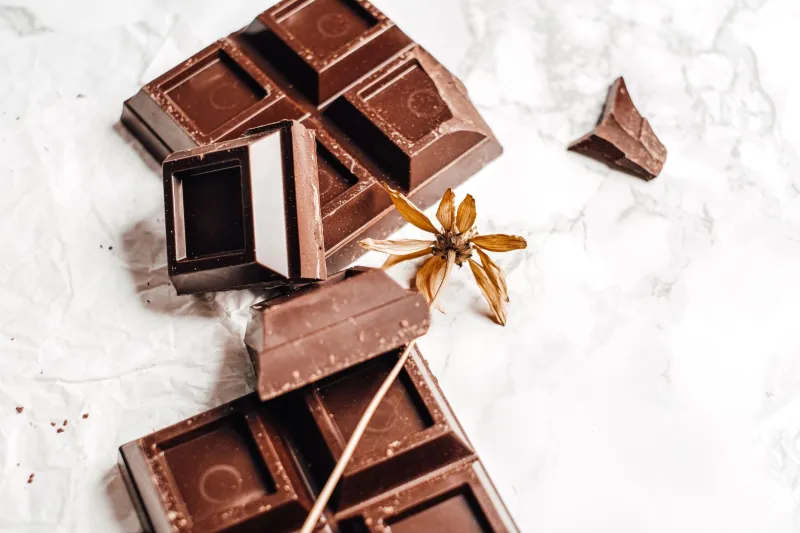
Dark chocolate is a stubborn host. It will accept the scent of a bay leaf or a cracked cardamom pod, but only if you ask politely. Heat it too hard, let a drop of orange juice fall into the bowl, or leave a damp strip of peel in the mix, and it will seize into a grainy paste. Do it properly, though, and you get a bar with a savoury, aromatic edge — the sort of thing that feels at home after a Sunday roast or beside a small glass of something bitter.
This is not a truffle recipe. It is a method for infusing melted dark chocolate with dry aromatics, then tempering it back into a bar with a clean snap. Once you have the basic rhythm, the flavours are yours to change.
Start with dry aromatics
Moisture is the enemy here. Fresh citrus peel, wet bay leaves and damp rosemary will all encourage chocolate to seize. Use dried bitter orange peel, dry bay leaves and whole spices that have been lightly toasted in a dry pan. If you are using rosemary, use a very small pinch of thoroughly dried needles, not a fresh sprig. The same goes for any tea or malted barley you might want to try: it should be dry to the touch.
Toasting the spices matters. A minute or two in a warm pan wakes up the oils in cardamom and clove and takes the raw edge off bay. Let them cool before they go into the chocolate. You are looking for fragrance, not colour.
The basic infusion
Work with 200g of dark chocolate, somewhere between 65% and 70% cocoa solids. Chop it finely so it melts evenly. Set a heatproof bowl over a pan of barely simmering water — the bowl should not touch the water — and melt the chocolate gently. Keep an instant-read thermometer handy. You want the chocolate at about 45°C, no higher.
Add your dry aromatics, stir once, and keep the bowl over the warm pan with the heat off. Let the chocolate sit at 40–45°C for 20–30 minutes, stirring every five minutes or so. Any cooler and the flavours will not infuse properly; any hotter and the chocolate may thicken or turn grainy.
Strain through a fine metal sieve into a clean, dry bowl. Press the aromatics gently with the back of a spoon to release the last of the chocolate, but do not squeeze hard enough to push through fine particles. Discard the aromatics.
Now temper. Melt the infused chocolate to 45–50°C, then remove it from the heat. Add 50g of chopped chocolate from the same bar and stir until the temperature drops to 28–29°C. Return the bowl briefly to the warm pan and bring it back to 31–32°C. Pour into moulds, tap the moulds on the worktop to release air bubbles, and leave to set at 18–20°C for an hour or two. If tempering feels like too much on a first attempt, setting the chocolate in the fridge will still give you the flavour — just not the same snap.
If the chocolate seizes at any point, do not panic. Warm cream and a whisk will turn it into a very good ganache. It will not become a bar again, but it will not be wasted.
Four winter combinations
Bay and smoked salt
Use two dry bay leaves for 200g of chocolate and add a quarter-teaspoon of smoked salt just before pouring. The bay brings a resinous, almost savoury note that sits well against dark fruit and cocoa. The salt should be a whisper, not a crunch. Tasting notes: bay leaf, smoke, dried fig, a long savoury finish.
Bitter orange and rosemary
Use two strips of dried bitter orange peel and a small pinch of dried rosemary. Keep the rosemary restrained; it can easily take over. The orange should smell like marmalade without the sweetness. Tasting notes: orange oil, pine, dark treacle, a clean bitter edge.
Cardamom and clove
Crack six green cardamom pods and add one clove. Toast them first, then infuse. This is the most traditional of the four, but it still tastes grown-up rather than festive-sweet. Tasting notes: eucalyptus, warm spice, cocoa, a faint medicinal hum.
Smoked salt and malt
Lightly crush a tablespoon of toasted malted barley and infuse it with the chocolate, then strain carefully. Add a quarter-teaspoon of smoked salt before tempering. The malt brings a toasted cereal note that feels very British and very wintery. Tasting notes: toasted grain, campfire, bitter cocoa, a dry finish.
Scaling for small-batch gifts
For gifts, a 30g bar is a sensible size. Twenty bars means 600g of chocolate, so multiply the base recipe by three. Scale the aromatics by weight, but taste as you go: cardamom and clove can become overpowering in larger batches, and smoked salt should always be added cautiously. A silicone mould makes the process simple, and a quick wrap of greaseproof paper and a handwritten label turns the bars into something worth giving.
Label each bar with the flavour and the date. Stored cool and dry, away from strong smells, they are best within about eight weeks. That is plenty of time for Christmas 2026, a birthday, or a very good Sunday evening in November.
Taste the finished bars at room temperature. Break one in half and listen for the snap. Let it melt on the tongue before you decide what you think. The best infused bars are not loud. They are the ones where the bay, the cardamom or the orange sits just behind the chocolate, like a voice from the next room.