The Desk-Drawer Cellar: Serious Chocolate for Office Afternoons

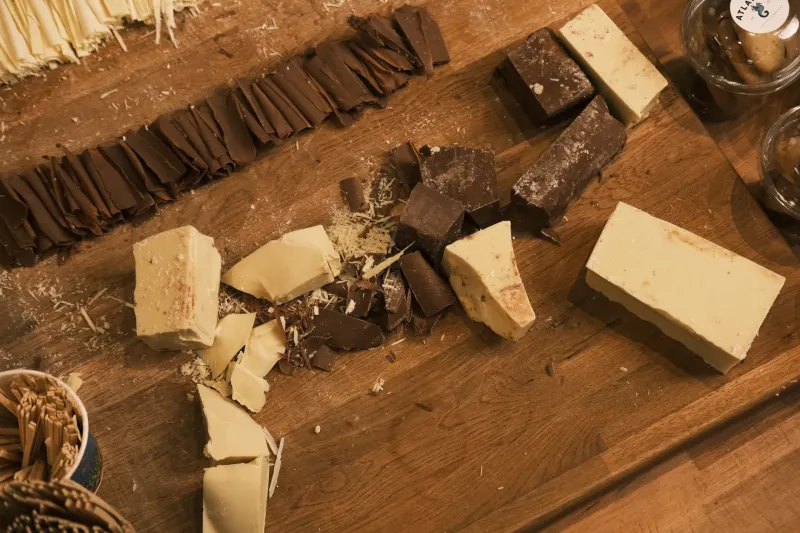
Photo by Photo by Alice Kotlyarenko on Unsplash on Unsplash
At about four o'clock, the office has a particular atmosphere. The kettle goes on, someone opens the biscuit tin with the enthusiasm of a parliamentarian reaching the end of a debate, and the afternoon briefly becomes negotiable. This is not the moment for a delicate truffle or a chocolate that has spent three months next to a radiator. It is, however, a very good moment for a square of serious dark chocolate - provided you have thought ahead.
The office is not a cellar
Most chocolate storage advice assumes a cool, dark, steady place. A workplace offers the opposite: hot desks, flickering air conditioning, a radiator that clicks on without warning and a drawer that gets opened every time someone needs a stapler. Add the smells of coffee, microwave soup and someone's scented hand cream, and you have an environment that can make even a decent bar taste tired.
The trick is not to fight the office. It is to give the chocolate a small, protected corner within it. A plain dark bar in its original wrapper, tucked inside a rigid tin or a sealed tub, will cope far better than a naked bar rattling around with paper clips. Keep it away from the radiator and the window ledge. Do not put it in the fridge: chocolate that comes out of a cold office fridge will attract condensation, and condensation is the enemy of snap and texture. If your workplace runs hot, choose a bar with a higher cocoa content and a firm structure rather than a soft, filled chocolate that will slump at the first hint of warmth.
Choose a bar that can take a working day
Office-friendly chocolate needs a certain resilience. I would look for a plain dark bar in the 65 to 75 per cent range, with a clean snap and no soft centre. Bars with whole nuts, cocoa nibs or a robust praline can work, but anything with a ganache, a fresh cream filling or a delicate flavoured centre is better saved for home. You want something that can be broken into squares without disintegrating and that tastes good after a few weeks in a drawer, not just on the day it was bought.
This is also where grown-up chocolate earns its place. A bar with a little bitterness and a long finish is more satisfying in small quantities than a sweet, fast-melting snack. It asks you to pay attention for a minute or two, which is exactly what the middle of a working day needs. It is not a replacement for lunch or a cure for a difficult meeting. It is a pause with a bit of character.
Storage without ceremony
You do not need a temperature-controlled drawer. You need consistency and a barrier against smells. Keep the bar in its foil and paper, then put it in a small tin. If you have opened it, fold the wrapper closed and use a clip. A label helps if you share a desk or a drawer with someone whose organisation is more optimistic than yours. Avoid storing chocolate next to strong-smelling tea, coffee or mints; cocoa butter picks up odours more readily than people expect.
If the office is very warm, a small insulated lunch bag with no ice pack can help, but do not overcomplicate it. A stable drawer, out of direct sun, is usually enough. The bigger risk is neglect. A bar forgotten under a pile of notebooks will still be edible, but it will not be at its best. Treat it as part of the drawer you actually use, not an emergency ration from 2019.
Portioning and the delicate matter of sharing
A whole bar in a shared office can disappear with alarming speed, and not always in the spirit you intended. Portioning at home is not fussy; it is practical. Break the bar into squares, put them in a small tin and take that to work. You are then offering a square, not surrendering a slab.
Sharing etiquette is simple. Offer once, clearly, and do not press it on anyone who says no. Ask before taking from someone else's labelled stash, even if it is sitting in the communal cupboard. Be mindful of allergies and dietary needs, and keep the wrapper nearby so people can check. A square of dark chocolate is a generous thing, but generosity works best when it is not a surprise raid on someone else's afternoon.
The four o'clock ritual
Make the square the point, not the prelude to another biscuit. Boil the kettle, choose a mug you actually like and sit down for a moment. Let the chocolate warm slightly on the tongue before you bite. Notice whether it is sharp, fruity, nutty or deep and savoury. A 70 per cent bar with red-fruit acidity will cut through a milky tea nicely; a 65 per cent bar with hazelnut notes will feel rounder and more comforting; a 75 per cent bar with cocoa nibs will give you texture and a long, dry finish. None of this requires a tasting sheet. It requires about ninety seconds of not looking at your inbox.
That is the real luxury of keeping good chocolate at work. Not the bar itself, but the decision to treat one square as a proper pause. The desk drawer becomes a small cellar, the afternoon gets a useful edge, and the biscuit tin can wait its turn.