A Herb in a Sweet's Clothing: Peppermint's Case for Serious Dark Chocolate
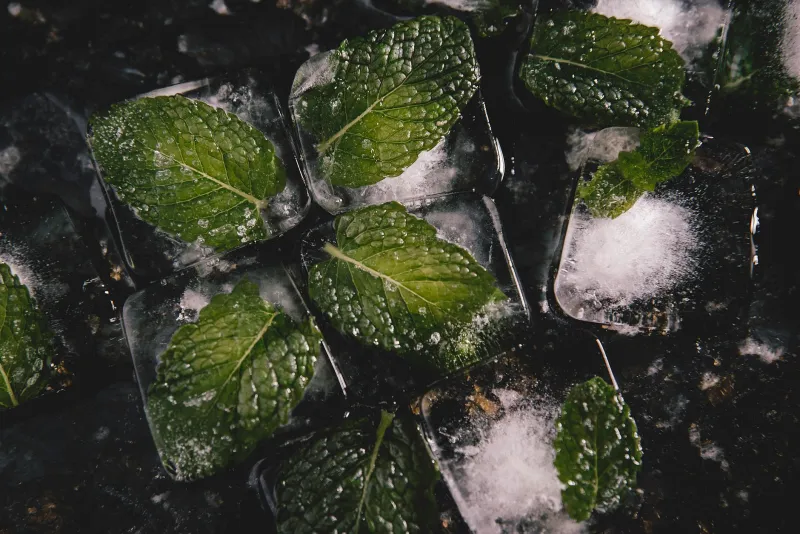
There is a mint chocolate that has done peppermint no favours. You know the one: thin, sweet, gone before the kettle boils, tasting less of a leaf and more of the idea of freshness. It lives in foil wrappers by restaurant tills and on hotel pillows, and it has taught a generation to expect mint as a cold flash rather than a flavour. That is a shame, because peppermint is a herb. Treat it like one and the whole category opens up.
Mint Is a Herb, Not a Mood
Peppermint and spearmint are plants before they are sweets. Peppermint is sharp, resinous, almost medicinal at its best; spearmint is softer, greener, closer to a garden path after rain. Think of the difference between a mint tea and a mint imperial and you are halfway there.
When a maker uses mint as a botanical — an infusion, an oil, a dried leaf — the chocolate stops shouting and starts speaking. The mint arrives late, after the cocoa, and leaves a cool trace rather than a sugary blast. British makers are getting better at this: steeping peppermint in cocoa butter, folding fresh garden mint into ganache, pressing tiny mint nibs into the surface of a bar so the herb is something you taste rather than something you merely notice.
The test is simple. Does the mint taste like a leaf, or like toothpaste? If it is the former, you have a grown-up chocolate on your hands.
The Percentage Problem
Cocoa percentage changes the finish more than most people expect. At 60–65%, mint chocolate is still in sweet territory: pleasant, rounded, but inclined to sit on the tongue like a fondant. Push to 70–75% and the mint gets a cool, almost savoury edge. The cocoa's bitterness gives the herb something to push against. At 80% and above, mint can feel medicinal in the best way — a herbal bitter, the sort of thing you might sip after a heavy dinner.
The trick is balance. Too much sugar and the mint becomes a sweet; too much cocoa and the mint turns to vapour. A good 75% mint dark chocolate should taste like a conversation between the two, not a competition. If the label says 85% and the mint still tastes like a candy cane, something has gone wrong — or right, depending on your patience.
The British Mint Revival
This is not a new idea, but it is a newly interesting one. British small-batch makers have been quietly rethinking mint for a few years now, and the results are turning up at farmers' markets from Bristol to Edinburgh. Spearmint is having a moment, partly because it grows well here and partly because it is gentler with high-cocoa chocolate. Garden mint — the sort that takes over a herb bed — is being used fresh in ganache, where its greenness cuts through the fat.
The best examples are not shouting mint. They are whispering it. You bite, you get snap, you get cocoa, and then a coolness arrives at the back of the throat like a thought you did not know you were having. That is the revival worth paying attention to. It has nothing to do with the bowl by the till and everything to do with the herb garden.
Texture Is the Tell
Mint chocolate lives or dies by texture. A fondant centre can be lovely, but it is also the reason so many adults write the category off: it is sweet, it is soft, and it is over too quickly. An infused ganache is a better vehicle for the herb — softer than a fondant, but with enough fat to carry the mint slowly. A bar with mint nibs or a mint-and-cocoa-butter shell gives you contrast: snap, then melt, then a herbal flicker.
If the mint arrives as a cold syrup, it is a sweet. If it arrives as a cool breath after the cocoa, it is a chocolate. That is the line, and it is worth tasting across a few bars to find where you sit.
Serve It Like You Mean It
A square of good mint dark chocolate does not need a doily. Serve it at room temperature — not from the fridge, where the cocoa fat tightens and the mint goes mute — and put it beside something bitter. Black coffee is the obvious move: the roast and the herb are natural allies. A small glass of amaro or a dark rum works too, especially after a Sunday lunch that went on a bit. Whisky can work if it is not too smoky; peat and peppermint tend to argue.
The after-dinner mint has been a ritual without a reason for too long. Give it a reason. A square beside an espresso, or a nightcap, or just a quiet minute at the kitchen table, is a better argument for peppermint than any pillow. It is a herb. It deserves a proper setting.
Peppermint does not need to be childish. It needs better chocolate, a slower bite and a bit of respect. Buy a bar, taste it next to the foil-wrapped version you remember, and note the difference. One is a sweet. The other is a grown-up chocolate, and it has been waiting.