The Other Dark Pour: British Stout Meets Serious Chocolate
Beer and chocolate can look like a novelty pairing from the wrong end of a gift shop. But British stout has a natural advantage: roasted barley already speaks the language of cocoa, coffee and dark dried fruit. The right bottle can flatter a serious bar, drawing out its sweeter edges and making the roast feel more articulate. The wrong one can flatten it completely, leaving nothing but bitterness and bubbles.
This is not a rulebook. Think of it as a winter route through three very different dark beers, with chocolate chosen to meet each one halfway. No scoring sheets, no solemn pronouncements, just small pours, sensible order and a bit of patience.
First, what stout actually brings
Stout is not chocolate, even when it tastes like it. Its dark character comes mostly from roasted barley, which gives coffee, toast and a dry, cocoa-like bitterness. Milk stout adds lactose for a soft, sweet finish. Porter tends to be rounder and more malt-led. Barrel-aged imperial stout brings vanilla, spirit heat and enough weight to knock over a delicate bar if you are not careful.
Carbonation matters too. A lively beer scrubs the palate, which can be refreshing between bites of rich chocolate, but too much fizz makes melted chocolate feel greasy. Hop bitterness is another variable: a heavily hopped black beer may clash with the fine tannins in high-cocoa chocolate. Alcohol is the third. A 10% imperial stout is not a background drink; it needs a chocolate with enough roast and structure to stand beside it.
Set the table properly
Serve chocolate at room temperature, not straight from a cold larder. Let the beer warm up too. Fridge-cold stout shuts down its aroma and makes the roast taste blunt; somewhere around 10–12°C is a good starting point for most bottles. Small glasses are more useful than pints. A tulip or a modest wine glass gives the beer room to breathe and keeps the pour honest.
Taste in stages: a sip of beer, a small piece of chocolate, then both together. Let the chocolate melt rather than chewing it like a biscuit. Keep water nearby and skip strongly flavoured snacks that will trample everything. Plain crackers are fine if you want a reset, but the best palate cleanser is usually a minute of doing nothing.
A three-glass flight for a winter evening
Start with milk stout and a 55–60% dark chocolate. The lactose sweetness in the beer should meet caramel, red berry and soft cocoa notes in the bar. Samuel Smith's Oatmeal Stout is a gentle, widely found option, or look for a milk stout from a local brewery such as Bristol Beer Factory. Keep the chocolate piece small; the point is a bridge, not a mouthful of pudding.
Move on to porter and a 65–70% bar. Titanic Plum Porter brings a fruity, almost jammy note that flatters chocolate with dried cherry or plum, while Harviestoun Old Engine Oil offers a drier, roastier counterpoint for a bar with cocoa nib and toast. This is the middle of the flight: more grip than the milk stout, but not so heavy that the chocolate disappears.
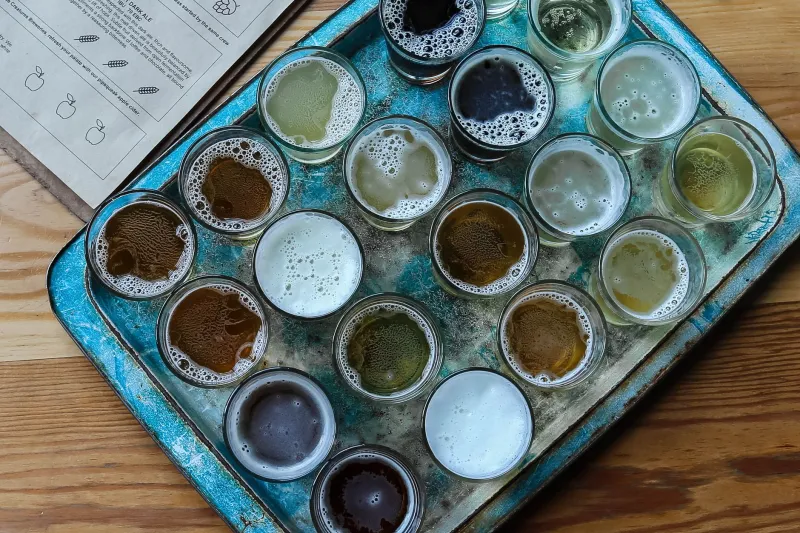
Finish with a barrel-aged stout and a 75–80% bar. Harviestoun Ola Dubh is the obvious British reference point, though small breweries regularly release barrel-aged imperial stouts worth trying. Look for vanilla, coconut and spirit on the beer, and choose a chocolate with firm roast, moderate bitterness and enough sweetness to handle the alcohol. Pour 100ml at most. This is a sipping round, not a session.
Where the pairing goes wrong
Most disappointments come from temperature and weight. A freezing-cold stout tastes narrower and more gassy than it should. A very sweet milk chocolate can collapse under a bitter, hop-forward dark beer. A delicate 60% bar has no answer to a 12% barrel-aged monster. And a 90% chocolate can make even a robust stout feel thin by comparison.
If a pairing feels flat, do not rush to blame the bar. Let the beer warm for ten minutes, take a smaller sip, or try a piece of chocolate with a touch more sweetness. Sometimes the fix is simply order: start lighter, finish heavier, and do not serve the strongest bottle first.
A short bottle list with a chocolate brief
Samuel Smith's Oatmeal Stout: soft, creamy and forgiving with 55–60% dark chocolate. Fuller's Black Cab Stout: dry roast and coffee, good with 65–70% bars showing toast and cocoa nib. Titanic Plum Porter: fruity and rounded, best with chocolate that has a dried-fruit edge. Harviestoun Ola Dubh: barrel-aged richness for 75–80% chocolate with firm roast. The Kernel Export Stout: robust and bitter, so choose a bar with enough sweetness to meet it.
Build the evening
Three bottles, three bars and four people is a generous setup. Cut the chocolate into small, even pieces before anyone starts drinking, label the beers if you are opening more than one, and keep the pours modest. Put the milk stout first, the porter in the middle and the barrel-aged beer last. Finish with water and a plain biscuit, then stop. The pleasure here is in the contrast, not in emptying the table.
Stout and dark chocolate work best when neither is trying to win. The beer should feel like a seasoning to the bar, and the bar should give the beer a little more shape. Get that balance right and a cold British evening needs very little else.