The Vocabulary of a Bite: Describing Dark Chocolate With Confidence, Not Cliché
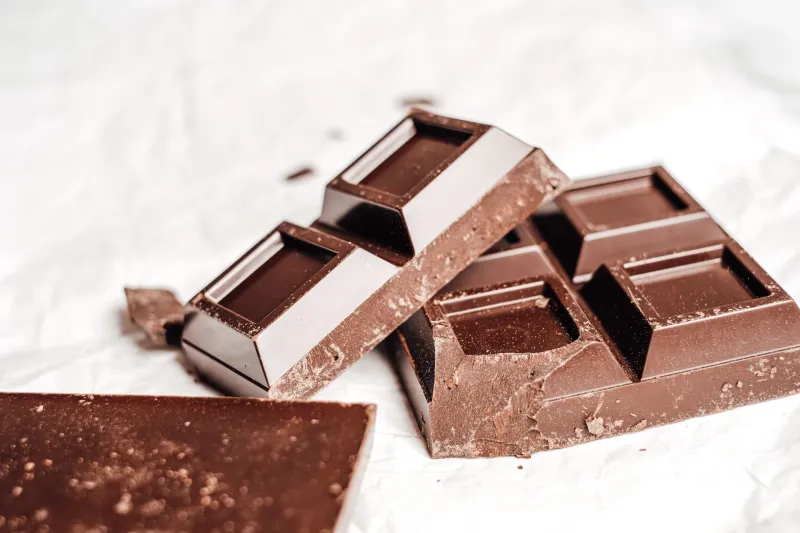
There is a particular moment of quiet panic that comes with a bar of single-origin chocolate and a room full of people who all seem to know what 'forest floor' means. Someone says 'leather', someone else murmurs 'stewed plum', and you are sitting there thinking it tastes mainly of chocolate. Which it does. That's fine. The language on the wrapper isn't a test you can fail — it's a set of shortcuts, and like any set of shortcuts it's only worth learning if it gets you somewhere you actually want to go.
So treat this as a phrasebook rather than a rulebook.
Why the Same Bar Reads Two Ways
Two people can eat the same square and describe it as entirely different things, and neither is lying. Chocolate tasting is a partnership between the bar and the person eating it, and the person brings quite a lot to the table.
For a start, there's what you already smell. The aroma compounds in dark chocolate overlap with those found in dried fruit, coffee, tobacco and good bread, which is why your brain reaches for those comparisons rather than inventing new ones. If you grew up in a house where the fruit bowl was figs and dates rather than strawberry laces, that's the vocabulary you'll find first. Memory is doing a lot of the work, and it's not especially interested in being objective.
Then there's the physical side. Cocoa butter melts at roughly body temperature, so how long you hold a piece before chewing it changes everything — bitterness registers later, sweetness earlier, and aromatics drift upwards once the chocolate has properly softened. Add in how warm the room is, what you last ate, whether you've had a coffee, and whether you're eating the bar after a long day or at eleven in the morning, and you have a small stack of variables. Genetics plays a part too: some people taste a compound called propylthiouracil, found in dark greens and some cocoa, as fiercely bitter, while others barely notice it. That's not a skill gap. That's taste buds.
The Terms, Translated
Most of the vocabulary is borrowed from wine, coffee and whisky, and it's more literal than it sounds.
Red fruit. Think cherries, raspberries, plums. In practice it usually means a bright, tangy acidity that reminds your nose of fruit rather than sugar. Common in beans from Madagascar and parts of South America.
Dried fruit and fig. A softer, darker sweetness, closer to raisins, dates or fig roll than fresh fruit. Often a sign of longer roasting or beans with naturally lower acidity.
Leather and tobacco. Not as alarming as it sounds. These are savoury, slightly dusty, quietly astringent notes that turn up alongside dark fruit in many aged or well-roasted bars. If you've ever eaten a good mature cheddar and thought 'that's a bit rustic', you're in the right territory.
Forest floor. The wrapper's favourite flourish. It generally means damp earth, mushrooms, moss, wet leaves — a savoury, almost truffly quality, usually in bars with less fruit and more grip. Some people adore it. Others find it strange. Both are reasonable.
Citrus. A clean, sharp lift, particularly at the back of the mouth. Can read as orange peel, lemon zest or something more grapefruity. It's often the first thing to dull if a bar has been stored too warm.
Floral. Jasmine, orange blossom, sometimes a faint lavender. Usually delicate and easily swamped by strong flavours around it — which is why it's worth tasting a floral bar before the coffee, not after.
Roasted and nutty. Toasted almonds, hazelnut, sometimes a hint of burnt toast. Essentially a marker of how the beans were roasted. Neither better nor worse than fruit; just a different dial position.
Spice. Not chilli heat but the warm, dry sort — cinnamon, clove, a whisper of gingerbread.
Acidity and grip. Two words that do a lot of work. Acidity is the bright, juicy quality that makes a bar feel awake. Grip (sometimes 'tannin') is the dry, puckering sensation on the sides of your tongue. A bar with acidity but no grip can feel thin; a bar with grip but no acidity can feel dusty.
Body. Simply how heavy the chocolate feels in the mouth. A 70% bar can be light and silky or thick and almost chewy, depending on the bean and the conching.
Finish. The length of time the flavour lingers after you've swallowed. 'Long finish' means it keeps going for thirty seconds or more; a short finish is gone in a breath. Neither is a fault, but the long ones do tend to be the ones you remember the following morning.
Tasting for the Note, Not the Label
The trick to finding these things isn't concentration; it's slowing down. Break off a piece, smell it before it goes anywhere near your mouth, then let it sit on your tongue and melt rather than chewing straight away. Breathe out gently through your nose while it's melting. That's where most of the aromatics live.
Keep a glass of water to hand, and keep the bar at room temperature rather than straight from the fridge. If you want to compare, buy two very different bars and taste them side by side — differences are easier to spot than absolutes. Don't chase a note you've read on the wrapper; if it doesn't arrive, it doesn't arrive. Wrappers are written by people tasting a specific batch in a specific room, and batches vary.
And write something down, even if it's just three words on the back of an envelope. Not to impress anyone — just so you can tell your own past self what you liked. 'Tastes like the smell of a stationer's' is a perfectly good note. So is 'plummy, grippy, gone quickly'.
Where the Language Stops Being Useful
A glossary is a wonderful thing until it becomes a competition. If your honest response to a bar is 'nice, quite dark, tastes of chocolate', that's not a failure of palate — it's a palate without a thesaurus in the way. The words exist to help you notice more, not to make you enjoy it less.
There's also a quiet snobbery in some tasting language that deserves a shrug. A bar doesn't become better because you can find leather in it. Plenty of superb chocolate tastes of almost nothing but cocoa and warmth, and plenty of very expensive chocolate is described in terms of Moroccan souks while being faintly disappointing in the mouth.
The best use of all this vocabulary is a personal one: a small, private shorthand that lets you walk into a shop or a website and recognise what you're about to buy. Learn half a dozen terms you actually taste, and ignore the rest until they turn up on their own. The fig and leather will still be there next time.