Cost per Gram, Not Cello Wrap: How to Judge a Chocolate Subscription Properly
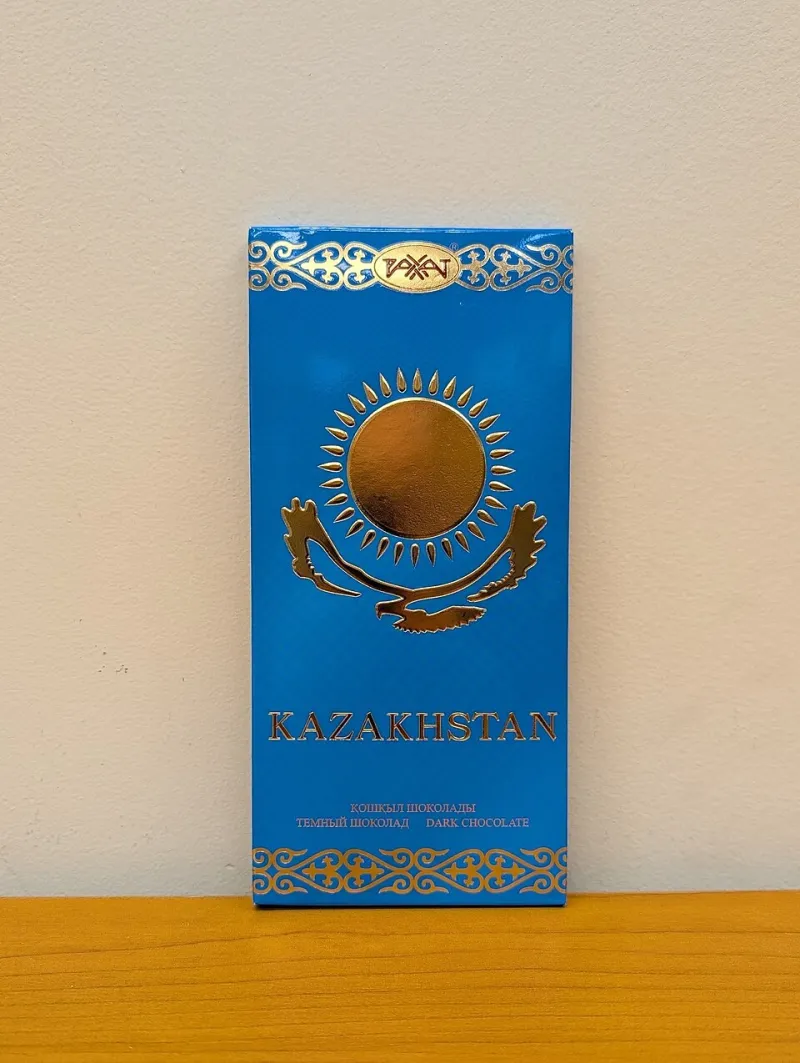
Photo: HapHaxion, CC BY-SA 4.0, via Wikimedia Commons
There is a particular kind of hopefulness that leads a person to sign up for a monthly chocolate box. It's the same impulse that makes us buy gym memberships in January: the belief that a small recurring payment will quietly turn us into a slightly better version of ourselves. Sometimes it does. Often you end up with eleven 25g bars in a drawer, three of them flavoured with something you'd rather drink than eat, and a mug you didn't ask for.
So before you hand over your card details, it's worth doing what most subscription marketing carefully avoids: sitting down with a calculator and a bit of scepticism. Not to be joyless about it — a good club is a genuinely lovely thing — but to make sure the one you pick is teaching you something rather than simply arriving.
Start with the sum nobody puts on the landing page
Take the monthly price, add the delivery if it isn't included, and divide by the total weight of chocolate in the box. That's your cost per gram. It's the only figure that lets you compare a £35 box of eight small bars with a £22 box of three big ones.
As a rough UK benchmark, a decent craft bar from a small maker tends to land somewhere between 8p and 13p per gram once you factor in postage. A subscription charging £28 for 250g works out at just over 11p per gram, which is fair — you're paying roughly what you'd pay buying individual bars, and the premium buys curation. A box charging £30 for 120g of chocolate plus a tote bag is 25p per gram, and you've bought a tote bag.
Two refinements. First, check whether the weights are chocolate or "confectionery" — inclusion bars with honeycomb and caramel weigh more but deliver less cocoa per bite. Second, be suspicious of headline RRP claims. "Worth £70" almost always means the sum of prices nobody has ever actually paid.
Range is the difference between a club and a shop
A good subscription rotates deliberately: origin, maker, percentage, style. One month a Madagascar single origin at 70%, the next a Dominican at 85%, then a dark milk, then an inclusion bar that earns its place. Over six months you should be able to look back and see a shape — a route through cocoa that someone has actually thought about.
The warning sign is repetition dressed as variety. If every box contains two bars from the same house with a different flavouring stirred in — gin and tonic, prosecco, birthday cake — you're not being educated, you're being entertained. Novelty flavours are the fastest way to disguise a thin range, because a strong flavour covers the bean. If you can't taste the chocolate underneath, there's probably not much underneath to taste.
Ask too whether there's a dark-only option. Any club serious about adult palates will let you opt out of the milk and white, or at least let you flag a preference. If the only choice is the standard box, that tells you who it's really designed for.
Provenance should be on the card, not just the website
A club worth keeping will tell you the bean origin, the maker, the harvest year if it's known, and the cocoa percentage — on the tasting card that comes in the box, not buried three clicks deep in a blog post. It will say something about how the bar was made and what to expect from it. It will not spend four hundred words on the packaging designer and then describe the chocolate as "rich and indulgent".
This matters practically. If you're trying to build a palate, you need to be able to compare. Two bars with origins and percentages logged are two data points. Two bars described as "smooth" are just a nice afternoon.
Flexibility is the whole game
The single most reliable predictor of whether you'll resent a subscription is how easy it is to stop. Check before you sign up:
- Can you pause for a month without emailing anyone?
- Can you skip a delivery, or does it simply arrive?
- Can you change frequency, or switch between dark-only and mixed?
- Is cancellation a button, or a phone call during office hours?
- Does a gift subscription renew itself automatically at the end of the term?
That last one catches people out every December. A three-month gift that quietly becomes a twelve-month direct debit is not a gift, it's a trap with a bow on it.
Other things to look for: whether warm-weather boxes arrive with insulation, whether there's an option to avoid repeats, and whether the chocolate is dispatched in a way that won't sit in a depot over a bank holiday weekend. Chocolate is patient but not infinitely so.
The signs you're buying novelty, not chocolate
A short list, drawn from experience: branded merchandise in place of chocolate; miniature bars under 25g doing the heavy lifting; a flavour list longer than the ingredient list; a QR code where a tasting card should be; "mystery" boxes with no provenance at all; and any language about "self-care" that never quite gets round to naming a farm.
What a good club actually does to your palate
Here's the honest case for subscribing. Left to your own devices, you buy what you already like. A well-run club removes that choice. It puts an 80% bar from a region you'd never have picked in front of you on a Tuesday, and by the following month you have an opinion about it. That's how palates are built — not through a single expensive tasting, but through sequence, repetition and comparison.
The best boxes encourage this directly: a card that asks you to note what you taste, a pairing suggestion, a nudge to keep the wrapper and compare it to next month's. Small things, but they turn eating into paying attention.
If it's a gift, buy the ending
For a grown-up present, a fixed term beats an open-ended subscription every time. Three months is enough to make an impression and short enough to feel considered. Six is generous. Twelve is a commitment you're making on someone else's behalf, and worth reserving for the person who has genuinely asked for it.
Make sure you can set the delivery address to theirs, that the first box arrives when you want it to — not three weeks after the birthday — and that the card carries a message. A subscription without a note is just a parcel.
The two-minute audit
Price per gram. Range over six months. Provenance on the card. A dark-only option. A pause button. A clear end date if it's a gift. If a club passes those six checks, it's probably worth a try. If it fails three of them, the packaging is doing all the work — and you can buy better chocolate, and better gifts, by simply choosing it yourself.