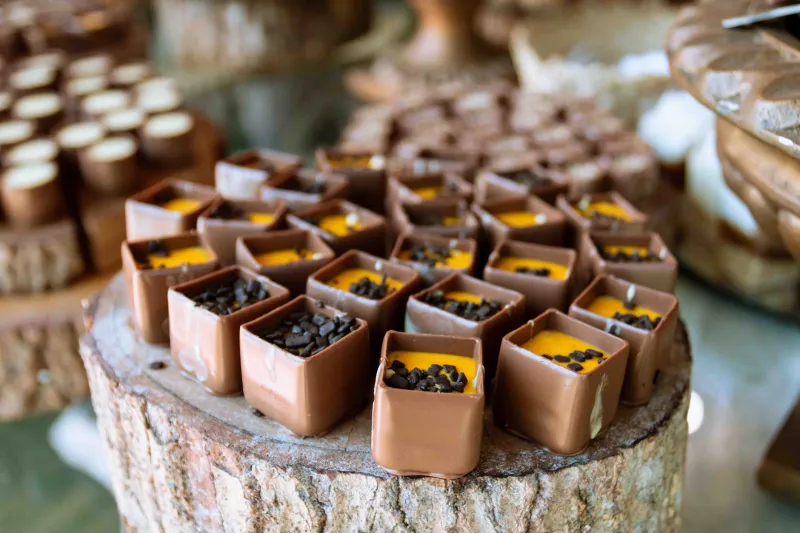
The Bitter Breakfast: Seville Marmalade and Dark Chocolate, Properly Paired

Photo: Tehmina Goskar, CC BY-SA 4.0, via Wikimedia Commons
Marmalade has an image problem. To some it's a worthy preserve saddled with childhood memories of gloopy toast; to others it's the only reason to own a decent butter dish. Dark chocolate, meanwhile, gets treated like a museum piece — admired, analysed, occasionally nibbled in reverent silence. Put the two together and something quietly useful happens. The bitterness of the peel meets the bitterness of the cocoa, the acidity cuts through the fat, and breakfast stops being a chore.
This isn't a novelty pairing. It's a practical one, and it rewards a little attention without demanding a laboratory notebook.
Why bitterness is the bridge, not the barrier
Seville oranges are not eating oranges. They're sour, seedy and packed with aromatic oils in the peel, which is exactly why they make marmalade worth eating. Those oils — citrusy, slightly resinous, a bit like the smell of a just-peeled orange lingering on your fingers — do something interesting to dark chocolate. They lift the fruitier notes in the cocoa and stop the whole mouthful from collapsing into sweetness.
Then there's the acidity. Marmalade is bright in a way that most jams aren't, and that brightness slices through cocoa butter's rich, slightly waxy coating. It's the same principle as squeezing lemon over a fatty fish, just with more toast involved. The sugar in the marmalade isn't there to make the chocolate taste sweeter; it's there to keep the peel's bitterness in check. Get the ratio right and the chocolate tastes more like itself, not less.
A scrape of salted butter underneath is not optional in my house. Fat carries flavour, salt sharpens the edges, and the whole thing holds together.
Three marmalades, three bars
You don't need a flight of twelve. Three of each is enough to learn something without turning breakfast into a tasting seminar.
The marmalades
Classic shredded Seville. Look for a dark, firm set with visible shreds and a bitter edge that makes you pause. Thick-cut gives more chew and more peel oil; fine-cut spreads more evenly and tastes a little more polite. Either works.
Tawny or whisky marmalade. Darker, deeper, with a caramel note from brown sugar or a whisper of spirit. This is the one for a cold Saturday, and it tends to flatter chocolate with a bit of age and earthiness.
A three-fruit or Seville-with-grapefruit version. Sharper, lighter, more acidic. Useful for anyone who finds straight Seville too assertive, and a good test of whether your chocolate can handle a bit of pithy brightness.
The bars
A bright 65–70% with red-fruit notes. Think cherry, plum, a little tartness. This is the easy entry point and the one most likely to please a crowd.
A 70–74% with citrus or floral top notes. Slightly leaner, more grown-up. It should make the marmalade taste sweeter and the peel taste more aromatic.
An 80%+ with earthy, leathery or tannic notes. This is the difficult one, and the most interesting. If the pairing works, the marmalade becomes a kind of relish. If it doesn't, you'll know within one bite.
The toast method, no lab coat required
Use a sturdy bread — sourdough, granary, something with a bit of crust. Toast it darker than you think you should. Let it cool for thirty seconds so the butter doesn't instantly surrender, then scrape on a thin layer of salted butter. Add a teaspoon of marmalade, spread it to the edges, and lay a thin sliver of chocolate on top. Not a chunk. A sliver.
Take a bite. Chew slowly. Then take a sip of water and try the next combination.
What are you looking for? First, whether the peel oils appear on the nose before the chocolate does. Second, whether the acidity makes your mouth water or makes you wince. Third, whether the finish is clean or claggy. A good pairing leaves you reaching for another bite; a bad one leaves you reaching for the kettle.
A word of warning: too much marmalade and the chocolate disappears. Too little and you're just eating chocolate on toast, which is fine but not the point. Start mean and add more.
Buying well without the lecture
None of this requires a specialist shop. UK-made marmalades are having a quiet renaissance, and the labels are getting better. Look for Seville oranges near the top of the ingredients, a decent percentage of peel, and no mysterious 'orange flavouring'. Sugar content varies wildly — some are jam-sweet, some are properly bitter — so check the per-100g figure if you care. Small producers at farmers' markets are worth a conversation; supermarket premium ranges are often perfectly good, if a little tamer.
For the chocolate, ignore the passport and taste the bar. A 70% from a British maker you trust will usually beat a 75% with a fancy origin story and a dull finish. Buy one bar at a time, keep it cool and dark, and don't let it sit in the fruit bowl next to the bananas.
The grown-up bit
The point isn't to make breakfast complicated. It's to notice that bitterness, acidity and fat can be arranged into something that feels like a treat rather than a routine. Marmalade and dark chocolate do that with very little ceremony. A good loaf, a decent butter, a spoon and a sharp knife — that's the whole kit.
And if you find a combination that makes you close your eyes for a second, that's not pretension. That's just breakfast earning its place.